What we are aiming for
At Bassenthwaite, we want every child to develop a strong understanding across the curriculum and to feel confident, capable and ready for the next stage of their learning.
We believe learning should be meaningful, engaging and rooted in real experiences. Our curriculum is designed to build secure knowledge and skills alongside positive attitudes, so children not only achieve well but also enjoy learning.
We want children to:
- develop curiosity by asking questions, exploring ideas and discovering more about the world around them
- grow in confidence so they are willing to take risks, share ideas and try new challenges
- become independent learners, able to think critically, make choices and reflect on their progress
- show empathy by understanding others, different perspectives and the wider world
- demonstrate kindness through respectful relationships, teamwork and support for one another
From the Early Years onwards, children build strong foundations through practical, engaging experiences. As they move through school, they deepen their understanding, make connections across subjects and apply their learning in a range of contexts.
We place high value on:
- developing communication skills, including speaking, listening, reading and writing
- building mathematical understanding and reasoning
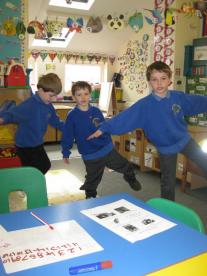
- fostering physical wellbeing and active lifestyles
- encouraging creativity, problem-solving and resilience
By the time children leave Bassenthwaite, we want them to be curious, confident and independent learners, who approach challenges positively, communicate effectively and show empathy and kindness in all they do.
How learning happens
Mixed age classes
Children are taught in mixed-age classes where supportive relationships and a calm learning environment help children feel secure and ready to learn. Maths is planned carefully to ensure clear progression for each year group and full National Curriculum coverage.
White Rose Maths and a mastery approach
We use the White Rose Maths framework. Learning is broken down into small, carefully sequenced steps so children can build understanding gradually and confidently. Key ideas are revisited and practised regularly so that knowledge becomes secure and easy to recall.
Concrete, pictorial and abstract learning (CPA)
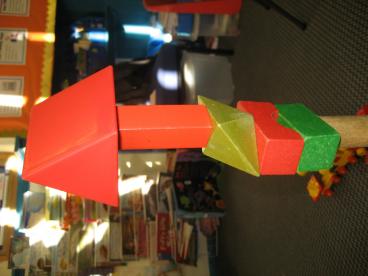
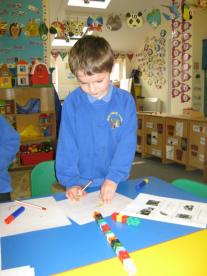
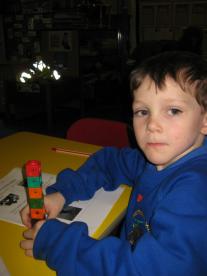
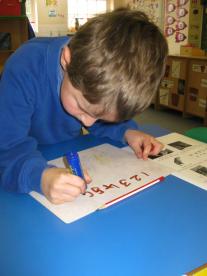
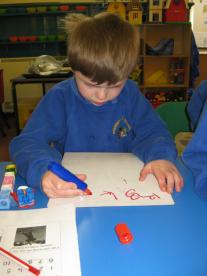
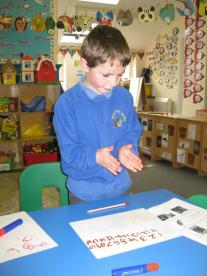
Children explore new concepts using practical resources and visual models before moving to abstract methods. This supports all learners and strengthens long-term understanding.
Fluency, reasoning and problem solving
Maths learning balances fluency, reasoning and problem solving. Children practise key skills, explain their thinking and apply learning in different contexts. Problem solving increases in challenge over time and builds resilience and independence.
What children gain
Through our maths curriculum, children develop secure number sense and a deep understanding of key mathematical concepts. They become increasingly fluent and accurate in core skills and learn to choose and use efficient strategies.
Children gain confidence in explaining their thinking, using mathematical vocabulary and representing ideas in different ways. They learn to reason, spot patterns, make connections and solve problems with growing independence and resilience.
By the time they leave Bassenthwaite, children see themselves as capable mathematicians. They approach challenges positively, apply their skills across subjects and everyday situations, and are well prepared for the next stage of their mathematical learning.
How we know
We know children are making progress in maths because we see growing confidence, accuracy and independence over time. Pupils can explain their thinking, use correct mathematical language and apply their skills to new problems.
Teachers review learning regularly through daily checks, end-of-unit tasks and termly assessments for number and reasoning. Ongoing observation and discussion help identify next steps quickly so that support and challenge can be adjusted.
How you can help at home
Parents and carers play an important role in helping children feel confident and positive about maths.
Talk about maths in everyday life
Count objects, compare quantities and talk about numbers when shopping, cooking or travelling. Ask questions such as “How many more?” or “Which is bigger?”
Build fluency little and often
Practise number bonds and times tables regularly using short, fun activities rather than long practice sessions.
Encourage problem solving
Involve your child in weighing, measuring and estimating at home. Encourage them to explain how they worked something out.
Celebrate effort and perseverance
Praise your child for trying hard, explaining their thinking and learning from mistakes. Confidence is just as important as accuracy.
Helpful websites for families
Parents may find the following websites useful for supporting maths at home:
- White Rose Maths – Maths with Michael
Short videos and activities linked to the school approach
https://whiterosemaths.com/maths-with-michael - BBC Bitesize (Primary Maths)
Clear explanations, videos and games for all areas of maths
https://www.bbc.co.uk/bitesize/subjects/z826n39 - NRICH
Problem-solving activities that encourage reasoning and discussion
https://nrich.maths.org/primary - Topmarks
Interactive maths games for EYFS, KS1 and KS2
https://www.topmarks.co.uk - Maths Factor (KS2)
A fun way to practise times tables
https://www.themathsfactor.com