What we are aiming for
At Bassenthwaite, learning a foreign language helps children develop curiosity about the world and an understanding of other cultures. Through French, pupils build confidence in communicating ideas, expressing themselves and engaging with people beyond their immediate community.
We aim for children to develop practical language skills so they can listen, speak, read and write in French with increasing confidence and accuracy. Learning French also helps children notice patterns in language, supporting their understanding of English grammar and vocabulary.
French encourages children to be confident and resilient learners who are willing to take risks, practise pronunciation and learn from mistakes. Through language learning, children develop empathy and respect for different cultures, traditions and ways of life.
By the time children leave Bassenthwaite, we want them to feel confident, prepared and excited to continue their language learning at secondary school.
How learning happens
Mixed-age classes
French is taught in mixed-age classes in Years 3 to 6. Lessons are planned on a rolling cycle to ensure clear progression in skills and knowledge as children move through Key Stage 2.
Teachers use a structured progression to build learning systematically across vocabulary, phonics and grammar. Prior learning is revisited regularly so children can retain and apply language confidently in new contexts.
A supportive classroom environment helps children feel safe to practise speaking aloud, take risks and develop independence as language learners.
How we get there
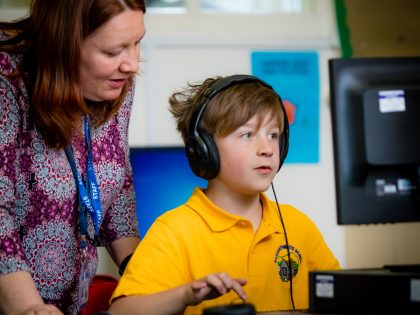
French is taught through engaging, topic-based units that encourage exploration, repetition and meaningful communication. Lessons are interactive and focus on using language for real purposes.
Children learn to work like language learners by:
- listening attentively to spoken French
- practising accurate pronunciation and intonation
- learning and using new vocabulary
- building phrases and simple sentences
- asking and answering questions
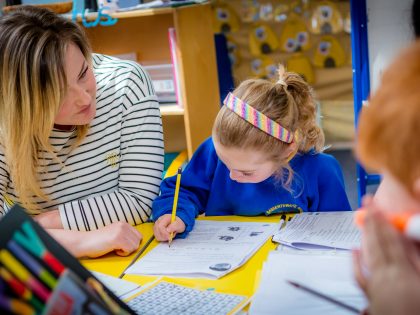
- reading and writing familiar words, phrases and short texts
Learning progresses from single words to phrases and sentences, with children encouraged to adapt language and apply it creatively. Songs, games, stories and conversations are used regularly to support memory and enjoyment.
Knowledge, vocabulary and language thinking
Our French curriculum develops both:
- language knowledge, including vocabulary, phonics and basic grammar
- language thinking, including pattern recognition, sentence building and meaning-making
Children learn how French grammar works, including gender, agreement and verb patterns, and how this compares to English. Key vocabulary is introduced, practised and revisited so children can use it confidently in speaking and writing.
Phonics is a key focus, helping children pronounce unfamiliar words accurately and read aloud with confidence. Children are encouraged to use strategies that build independence as language learners.
What children gain
Through learning French, children:
- develop confidence in speaking and listening
- build a growing vocabulary and understanding of grammar
- learn to read and write simple texts in another language
- develop curiosity about other cultures and countries
- grow in resilience, independence and willingness to take risks
French supports children’s spiritual, moral, social and cultural development by helping them understand diversity, respect others and see themselves as global citizens.
By the time they leave Bassenthwaite, pupils have a secure foundation in French and are ready to continue their language learning in Key Stage 3.
How we know
We know children are making progress in French through their increasing confidence, accuracy and independence in using the language.
Teachers assess learning through:
- observation of speaking and listening activities
- participation in songs, games and conversations
- reading and writing tasks
- use of vocabulary and sentence structures
- questioning and informal assessment
Regular revisiting and retrieval ensure language knowledge is secure and continues to develop.
How you can help at home
Parents and carers can support French learning in simple, enjoyable ways.
Practise little and often
Encourage your child to repeat words and phrases they have learned at school. Short, regular practice helps build confidence and memory.
Enjoy songs and games
French songs, rhymes and games are a fun way to practise pronunciation and vocabulary together.
Be positive about speaking
Praise effort rather than accuracy. Encourage your child to have a go and remind them that making mistakes is part of learning a language.
Notice French in everyday life
Look out for French words on packaging, menus or when travelling. Talk about similarities and differences between languages.
Ask your child to teach you
Let your child show you what they have learned. Teaching others helps children feel confident and independent.
Helpful websites for families
Parents and carers may find the following websites useful for supporting French at home:
- BBC Bitesize – Primary French
Videos, songs and activities for beginner language learners.
https://www.bbc.co.uk/bitesize/subjects/z39d7ty - Duolingo (with adult supervision)
Short, game-like activities to reinforce basic vocabulary.
https://www.duolingo.com - Digital dialects
- Games to practise key vocabulary
- https://www.digitaldialects.com/French.htm
These resources work best when used alongside encouragement, conversation and enjoyment of learning a new language together.